
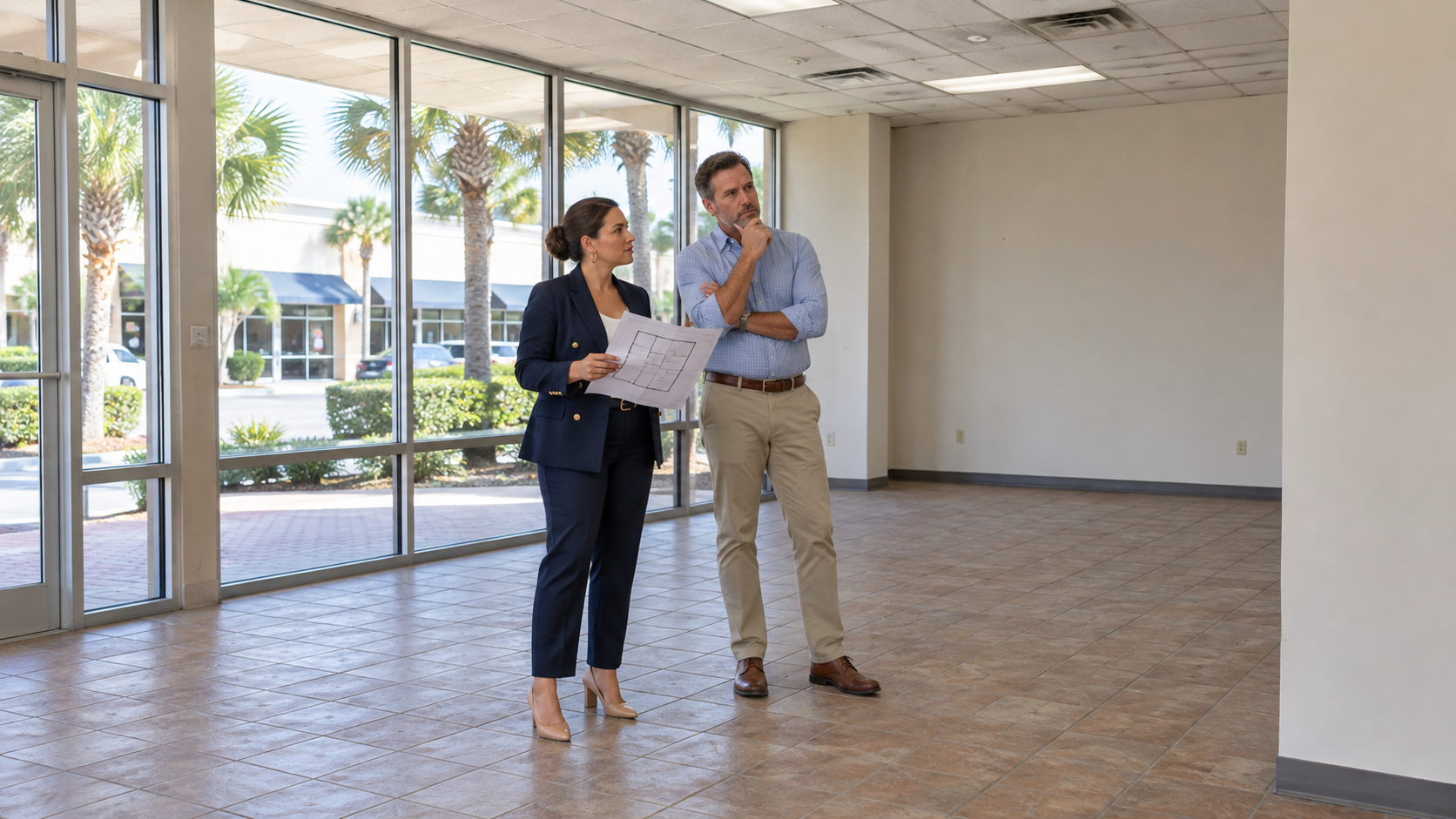
Quick answer: Most commercial properties that won't lease have one of five problems. The total occupancy cost is above market, the space condition doesn't fit today's tenants, the lease terms are too rigid, the marketing isn't reaching active tenants and brokers, or the space is aimed at the wrong tenant or use. Find which one applies before you cut rent.
A vacant suite costs more than lost rent. The owner still pays taxes, insurance, utilities and maintenance, and a long vacancy can lower the property's value when it's time to refinance or sell.
American Property Group leases and manages office, retail, industrial and restaurant space across Sarasota, Manatee and Charlotte counties. When a space isn't moving, these are the causes we check first.
1. The Total Cost Is Out of Line With the Market
Tenants compare total occupancy cost, not just base rent. In Southwest Florida, rising property insurance and taxes have pushed up NNN and CAM charges. A competitive base rent can still lose if the pass-through expenses are high.
Compare your all-in cost per square foot with similar spaces in your submarket.
Make sure your listing shows estimated NNN or CAM charges clearly. Leaving them out discourages inquiries.
Florida's state sales tax on commercial rent was repealed effective October 1, 2025. Remove any outdated rent-tax language from your listings and lease forms.
More on lease structures: NNN Lease vs. Gross Lease.
2. The Space Isn't Ready for Today's Tenants
Many tenants can't picture a raw or dated space. They don't want to manage a long buildout either. Common problems include:
Old finishes, stained ceilings or worn flooring
HVAC, electrical or plumbing that doesn't fit modern uses
Layouts that are too chopped up or too open for the target tenant
Accessibility issues that would be expensive to fix
A light refresh (paint, lighting, flooring, a clean restroom) often costs less than a few extra months of vacancy. For restaurant space, an existing hood, grease trap and approved restaurant use are major selling points. Show them prominently.
3. The Lease Terms Are Too Rigid
Small and mid-size businesses make up most of the tenants in our region. Requiring long terms, large personal guarantees or no tenant improvement help can shrink your pool of tenants. Consider where you can be flexible:
Lease length and renewal options
A tenant improvement allowance or landlord-performed work
Free rent during buildout, or stepped rent
Security deposit size, matched to the tenant's financial strength
Concessions usually protect the property's value better than lowering the face rent, because the base rent stays intact for future appraisals and sales.
4. The Marketing Isn't Reaching Active Tenants
A sign in the window isn't a marketing plan. Effective commercial leasing marketing includes:
Professional photos, a floor plan with dimensions, and clear rent and expense information
Listings on commercial platforms such as LoopNet and Crexi, and on your broker's website
Outreach to tenant-rep brokers, who represent many of the businesses looking for space
Targeted email and social media to businesses in fitting industries
Fast responses to inquiries and easy access for showings
Slow call-backs and hard-to-schedule showings quietly kill a lot of leasing activity.
5. The Space Is Aimed at the Wrong Tenant or Use
Sometimes the space is fine, but the target is wrong. Zoning may not allow the uses most likely to want the space. Parking may be too limited for medical or restaurant users. Or the space may be marketed as office when it would work better as flex or retail. Check the allowed uses with the right city or county, and market to the tenants the location actually attracts.
Leasing Diagnostic: Symptoms and Likely Causes
Few or no inquiries: Marketing reach or pricing visibility — Improve listing exposure, photos and rent/expense clarity
Inquiries but few tours: All-in cost or listing details — Compare total occupancy cost to competing space
Tours but no offers: Condition, layout or parking — Light refresh, test-fit plans, TI options
Offers that fall apart: Rigid terms or use/zoning limits — Revisit concessions and verify allowed uses
When Should You Lower the Rent?
Lower the rent after you've tested the other factors, not before. If the space shows well, is marketed broadly and the terms are competitive, but it still isn't drawing serious tenants after a reasonable period, then the price is probably the problem. Compare the cost of a lower rent with the carrying cost of another six months of vacancy.
Get a Second Opinion on Your Vacancy
If your space has been on the market longer than expected, APG can review the pricing, condition, terms and marketing and tell you what we'd change.
Request a leasing and marketing review → or call (941) 923-0535.
Frequently Asked Questions
-
The most common reasons are total occupancy cost above market, outdated or poorly configured space, rigid lease terms, limited marketing exposure, or targeting the wrong tenant or use. A leasing review can find which factor is holding the property back.
-
It varies by property type, location, condition and price. Well-priced, move-in-ready space in a strong location leases faster. Second-generation restaurant and industrial space is often in demand, while dated office space can take longer.
-
Often, yes. Concessions such as free rent during buildout or a tenant improvement allowance can attract qualified tenants while keeping the base rent, and the property's value, intact. The right mix depends on the space and the tenant's credit.
-
No. Florida repealed the state sales tax on commercial rent effective October 1, 2025. Landlords should update listings, invoices and lease forms that still reference the tax.
-
A commercial leasing broker adds market pricing data, listing platform exposure, relationships with tenant-rep brokers and negotiation experience. Together these usually shorten vacancy and improve lease terms.