
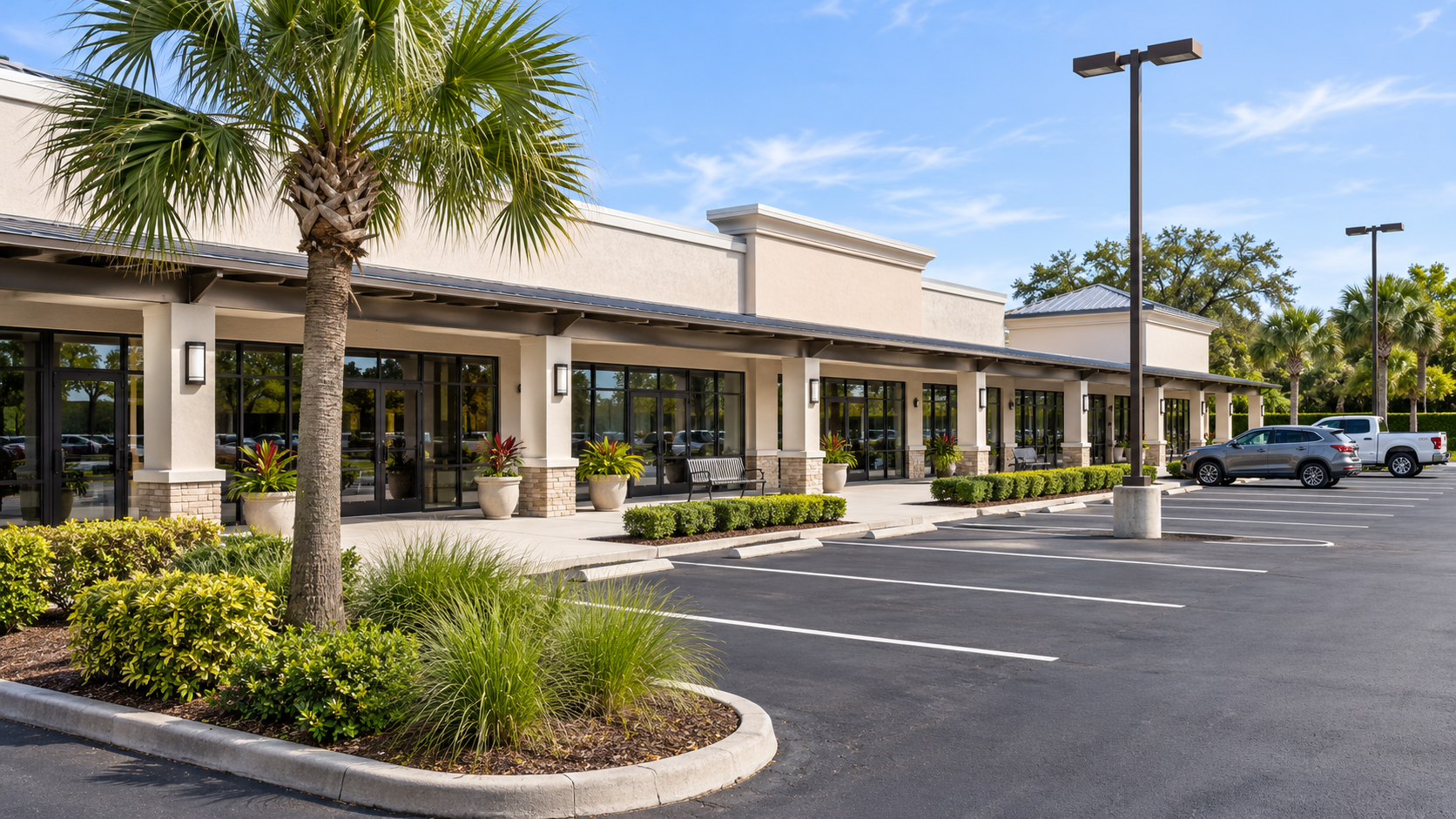
Quick answer: CAM (common area maintenance) charges are a tenant's share of the cost to operate and maintain the shared areas of a commercial property, such as parking lots, landscaping, lighting and common hallways. Landlords usually bill an estimated amount each month, then compare it with actual costs at year end and issue a reconciliation. A tenant's share is normally its square footage divided by the property's total leasable area.
CAM is one of the most common sources of confusion, and disputes, in commercial leasing. For tenants, CAM can be a large part of the total cost of a space. For landlords, accurate CAM billing protects income and keeps tenant relationships on track.
American Property Group leases and manages office, retail, industrial and restaurant property across Sarasota, Manatee and Charlotte counties, and we prepare CAM budgets and reconciliations for the properties we manage. Here is how CAM works.
What Do CAM Charges Typically Include?
The lease defines what can be billed, so always read the CAM section closely. Common items include:
Parking lot maintenance, sweeping, striping and lighting
Landscaping and irrigation
Common area utilities, such as exterior lighting and shared restrooms
Janitorial service for shared spaces
Trash removal
Security, gates or access systems
Repairs to shared areas
Property management or administrative fees
Many Florida leases also bill property taxes and property insurance as separate pass-through charges. Together with CAM, these make up the "NNN" or "triple net" charges a tenant pays in addition to base rent. More on lease structures: NNN Lease vs. Gross Lease.
What Is Usually Excluded?
Leases commonly exclude the landlord's own costs of owning the property, such as:
Mortgage payments and loan costs
Leasing commissions and costs to prepare space for other tenants
Costs to fix construction defects
Expenses reimbursed by insurance or by another tenant
Capital improvements, such as a new roof or repaving the parking lot, are handled differently from lease to lease. Some leases exclude them, and others allow the cost to be spread out over the useful life of the improvement.
How Is a Tenant's CAM Share Calculated?
Most leases use a pro rata share: the tenant's square footage divided by the property's total leasable square footage.
Example: a 2,000 SF tenant in a 20,000 SF center has a 10 percent share. If the center's annual CAM budget is $60,000, the tenant pays $6,000 a year, or $500 a month in estimates.
Some leases adjust this. Anchor tenants may pay a different share, and some leases include a "gross-up" clause that adjusts variable costs as if the building were fully occupied, so remaining tenants are not overcharged or undercharged when space is vacant.
How Do CAM Reconciliations Work?
1. Before the year starts, the landlord prepares a CAM budget and bills monthly estimates.
2. After the year ends, the landlord totals actual expenses.
3. Each tenant receives a reconciliation statement comparing estimates paid with its share of actual costs.
4. The tenant pays any shortfall, or receives a credit or refund for any overpayment.
Late or skipped reconciliations are one of the most common problems we see. They can leave a landlord unable to collect costs it was entitled to, or surprise a tenant with a large catch-up bill. Reconciliations delivered on time, with clear backup, prevent most CAM disputes.
CAM in Southwest Florida: What to Watch
Insurance: property insurance costs in Florida have risen in recent years. Where insurance is billed to tenants, this has pushed NNN charges higher.
Storm preparation and recovery: hurricane preparation, debris cleanup and deductibles may or may not be billable depending on the lease. Check the language before storm season, not after.
Seasonal costs: landscaping and irrigation needs can vary through the year, so budgets should reflect the full 12 months.
Sales tax on rent: Florida's state sales tax on commercial rent was repealed effective October 1, 2025. Make sure invoices and lease forms reflect the change.
Tips for Tenants
Ask for the current year's CAM budget and last year's actual CAM before signing.
Look for a cap on annual increases in controllable expenses.
Confirm whether management fees, capital costs and insurance deductibles can be billed.
Ask whether the lease gives you the right to review or audit the landlord's records.
Tips for Landlords
Write a clear CAM clause that lists what is included and how capital costs are handled.
Budget realistically so year-end reconciliations do not surprise tenants.
Deliver reconciliations on schedule, with organized backup for every charge.
Show estimated NNN charges in your listings. Tenants compare total occupancy cost, and listings without it draw fewer inquiries.
Need Help With CAM?
Whether you are a landlord behind on reconciliations or an owner thinking about professional management, APG's property management team can help.
Learn about APG property management → or call (941) 923-0535.
Frequently Asked Questions
-
CAM stands for common area maintenance. It is the tenant's share of the cost to operate and maintain shared areas of a property, such as parking lots, landscaping, lighting and common hallways.
-
Not exactly. CAM is one part of NNN charges. NNN, or triple net, usually covers three categories: CAM, property taxes and property insurance.
-
Most leases use a pro rata share, which is the tenant's square footage divided by the total leasable square footage of the property, applied to the property's annual CAM costs.
-
A CAM reconciliation is the year-end comparison of the estimated CAM a tenant paid with its share of actual costs. The tenant pays any shortfall or receives a credit for any overpayment.
-
Often, yes. Many leases give tenants the right to review or audit the landlord's CAM records within a set period after receiving the reconciliation. The specific rights depend on the lease.